The marketplace in Arjeplog
- English
- Svenska
- Meänkieli (not available)
- Julevsámegiella (not available)
- Bidumsámegiella
- Davvisámegiella (not available)
Plass`n
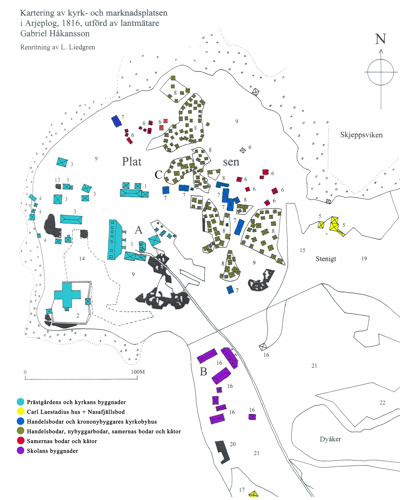
The old marketplace, or Plass’n (“the place”) as it was called, is strategically located by the water. An area whose long history begins during the 1600’s mining project at Nasafjäll. The marketplace became a hub for trade but was also a meeting place for citizens, nomads and later permanent residents. Here skins, wadmal fabric, flour, salt, silver and other products were exchanged, bought and sold. A place to get and share the latest news from the coast, inland and beyond.
Throughout history, people have met to exchange goods, stories and knowledge. Goods such as fur, metal, beads, and ceramics have traveled far, carried from hand to hand and place to place. Ever since people first came here almost 10,000 years ago, contact and cultural exchange with others have been important for development and survival. We cannot know exactly what these encounters were like, or how different materials and techniques changed hands, but finds such as flint, asbestos-tempered pottery and soapstone vessels show that people had contact far beyond their local area several thousand years ago.
Between 800 and 1000 BCE, Sábme became part of a large trading network stretching across Europe, with connections to central Europe, the British isles and eastern Europe, where furs were highly sought after. The Sami played an important role as intermediaries between east and west. Trade was often based on cooperation and friendship. Goods were exchanged at agreed meeting places, and gifts and rituals could also be part of the exchange.
For a long time, commerce here was controlled by tradesmen from the coast. These tradesmen were called birkarlar and they were the only people permitted to trade with the Sámi. When the Crown wanted to exert more control over trade, laws were written that determined when, where and how trade could take place. Special marketplaces were established for this purpose.
The Marketplace
In 1641, when the mine at Nasafjäll brought more people and goods travelling between the coast and the interior, Arjeplog became a marketplace of its own. Here, merchants traded and sold goods such as woollen cloth, flour, salt, tobacco, pipes, iron, bronze, silver and spirits in exchange for local products, mainly reindeer hides and other furs. When people gathered for the market, church services, court sessions and tax collection were also held.
Sheds and storerooms
“No [...] church town in Lapland
is as irregularly built as the one in Arjeplog.
Cottages, stables and huts next to each other,
as well as sheds, all in a hodgepodge, [...]”
From the Journal of Petrus Laestadius, from the first year of his service as a missionary in Lapland (1831).
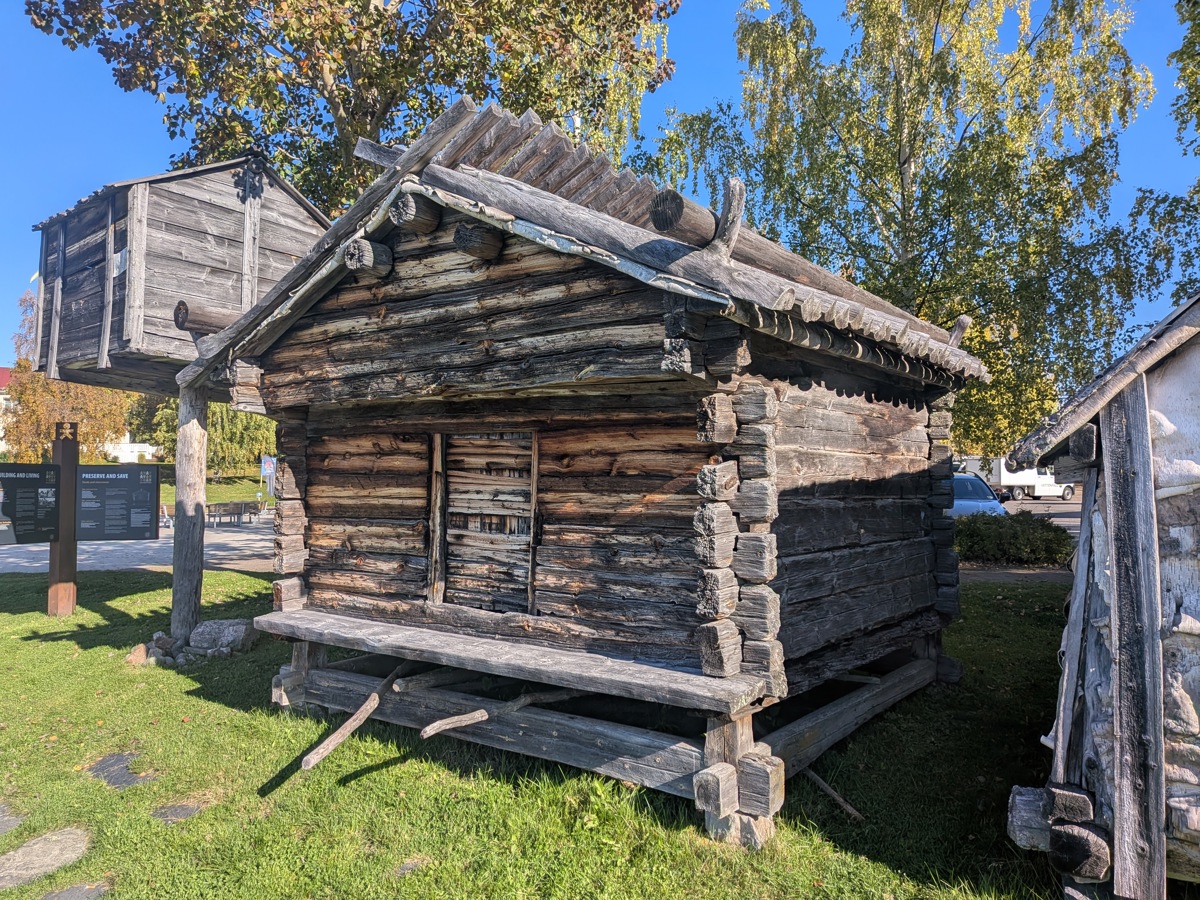
One of the sheds Petrus Laestadius mentions is the one you see here. People have spent the night in it during market visits and things have been stored here between church holidays and markets.
The shed, which was probably built in the 1700’s, originally stood at the old church- and marketplace which was on the hill by the church.
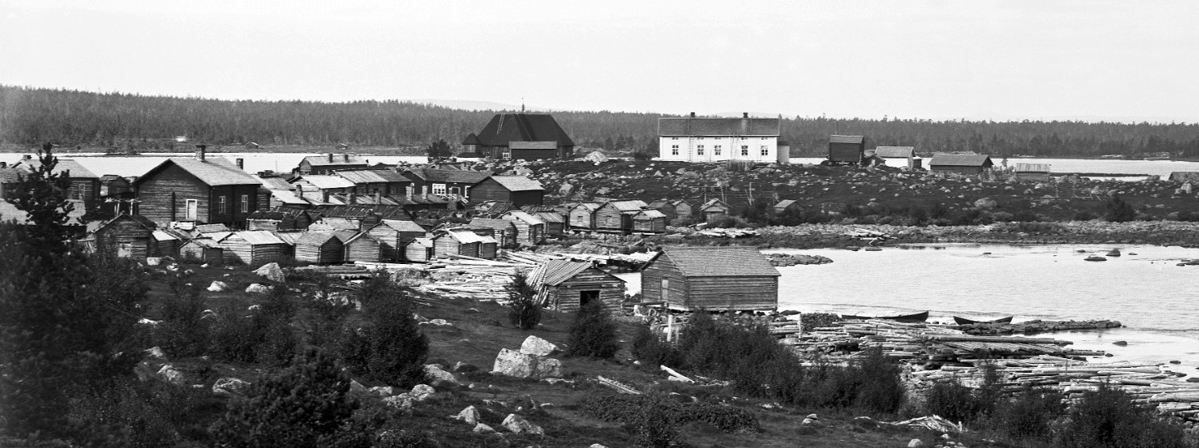
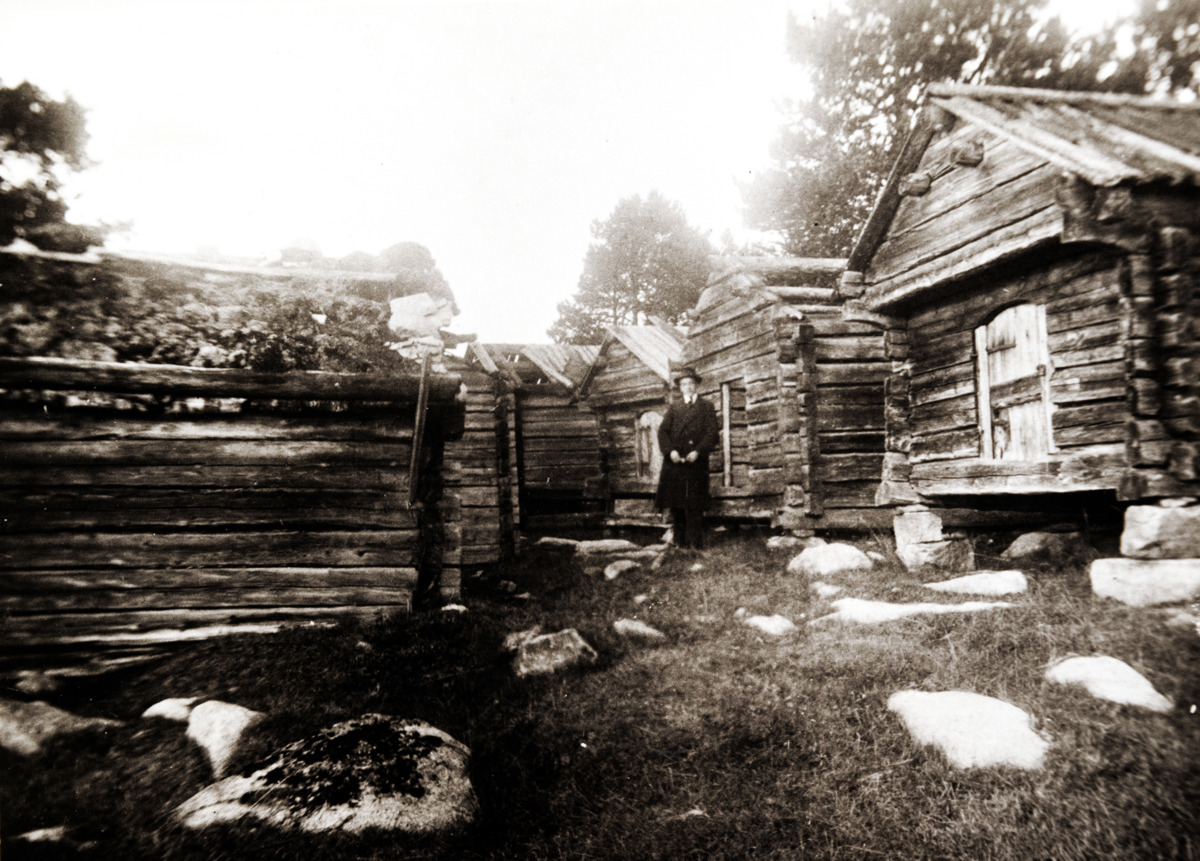
When time came to plan and regulate the town, huts and sheds were moved. This shed has stood in many different places, among other things it has been used as a playhouse for the children who lived at the boarding school and the workhouse. At the end of the 1800’s, there were still around 60 sheds of this type down by Skeppsviken.
Ájjte, the wooden shed, was an important storehouse for the forest Sami.
The post base with half-split “mouse logs” together with the posts would prevent mice and voles from getting inside. In the Arjeplog area, the sheds have wooden roofs, with sub-roofs made of split timber, birch bark and outer wood. On the shed you see here, pine logs have been split into four parts and placed with the outside facing down. Thin branches have been stuck through holes in the upper part, which holds the roof in place. In older sheds, the door hole was small and usually with a curved top.
The ájjte from the marketplace has been built with a half-threshold knot (heavy knot), which is unusual in Arjeplog.
Petrus Laestadius, a priest and missionary who lived in Arjeplog for a time, described how trade could take place:
The merchants who came to the marketplace each had a particular group they traded with. Before any trading began, the merchant offered a drink of spirits and a gift – for example, a small pair of scissors or a sewing ring. In return, the other person would give a piece of meat as thanks.
The Church Site
Getting to church
With a boat over blue depths, we travel on the water and on the white expanses of ice it is easy to make your way.
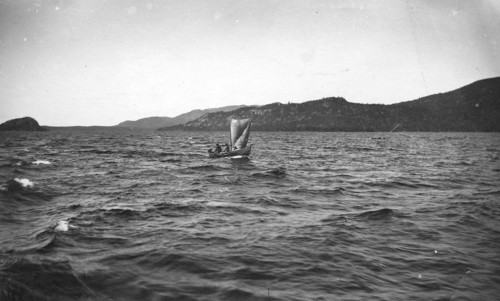
Water is a lifeblood in Arjeplog.
Large lakes spread across the landscape.
Where the lakes meet, we also meet.
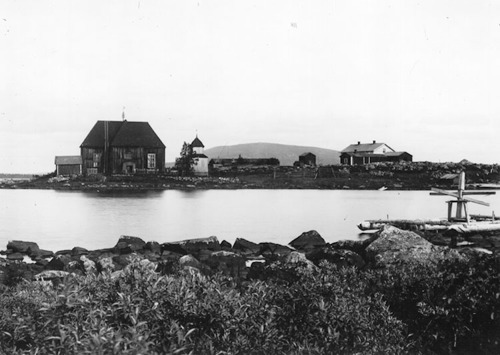
The headland here at the outlet of the Hornavan has been such a natural place to rest and meet. The people of what used to be called Pite Lapland traveled to Arvidsjaur to attend market and church. But with the mining in Nasafjäll Arjeplog became its own parish with three church sites - Nasafjäll, Silbojokk and Arjeplog. The first log church here was built in 1641, and we got our own marketplace.
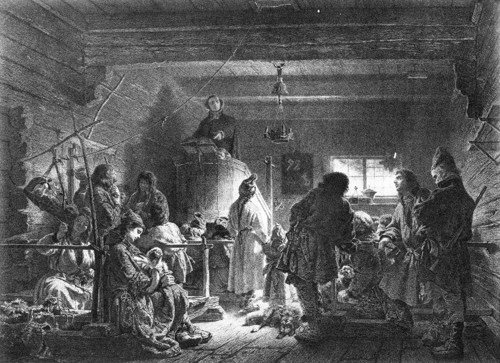
In 1768, a new, larger cross church was inaugurated. During a major reconstruction in the 1890s, a tower was added. Until then, the entrance faced the south and the water, because before the road existed, this is where the visitors arrived.
Another drink was then offered, also to those accompanying them. After that, it was time to trade the “real” goods – and this too involved strong drink.
A description of the winter market in Arjeplog in 1929 tells us that both nomadic and settled people sold large quantities of reindeer hides, as well as furs from otter, fox, ermine, hare and squirrel. Fish, shoes and travelling rugs made from reindeer calf skins were also sold. Large quantities of wild birds were offered for sale. At this time, between 20,000 and 30,000 ptarmigans were reportedly caught in Arjeplog each year, most of them sold at the market.
Taggar/sökord:
Peter Uven
Uppdaterad: 11 Sep 2026
Publicerad: 26 Aug 2026